
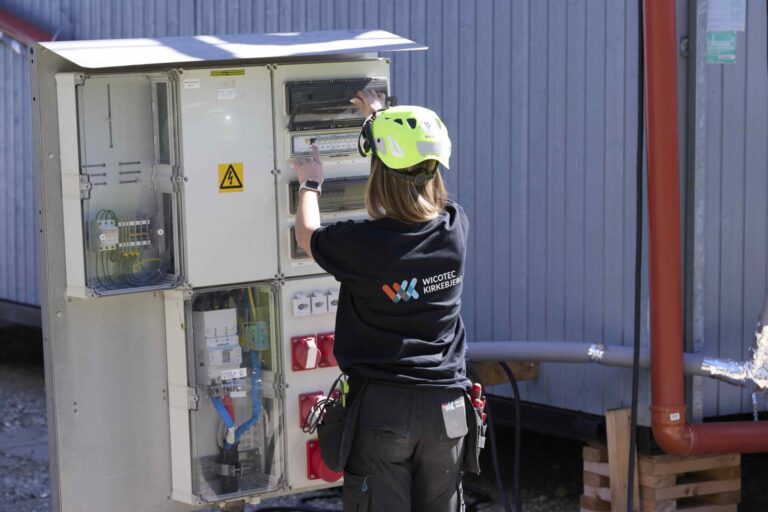
When Service Becomes a Competitive Advantage
For Wicotec Kirkebjerg, digitalising field service is about creating greater value for customers. By combining one digital platform with powerful integrations and a vision of turning data into valuable insights, the company has made service a strategic competitive advantage. And the journey is only just beginning.
Wicotec Kirkebjerg A/S is a Danish technical contractor and service provider specialising in electrical installations, plumbing, heating, ventilation and technical infrastructure. The company has more than 1,900 employees and annual revenue exceeding DKK 3 billion.
For many companies, digitalising field service is primarily about scheduling jobs, recording time and documenting completed work. But Wicotec Kirkebjerg has much bigger ambitions.
The company sees service as a strategic part of its business. It’s not just about sending the right technician with the right spare parts. It’s about giving customers a clearer understanding of their technical assets – turning service into something that improves operational reliability, supports better decisions and builds stronger customer relationships.
Making that vision a reality requires systems that work seamlessly together. Information needs to flow between people and platforms. Technicians need to work in one system, even when customers have their own. And service documentation needs to do more than sit in a database. It needs to create real value for both customers and the service organisation.
That’s why Wicotec Kirkebjerg decided to take a new approach to its Field Service Management platform back in 2019. Since then, the solution has been rolled out to several hundred technicians, integrated with systems used by some of the company’s largest customers, and become a central part of its strategy for developing the service business.
The next step is to expand the platform’s role even further across the organisation.
“If it were just about recording time and materials, we could have done that in many different ways. For us, it’s about delivering better service and giving customers much greater insight into their technical assets. That’s where the real strategic value lies,” says Michael Landsgaard, Divisional Director and Head of Service/FM at Wicotec Kirkebjerg.
Wicotec Kirkebjerg’s Vision for the Future of Field Service
Wicotec Kirkebjerg aims to build a service business where data, integrations and documentation enable a more proactive approach, better customer advice and greater value throughout the entire lifecycle of technical assets.
A modern field service platform can support:
- Service contracts and preventive maintenance schedules
- Asset history and complete service documentation
- Integrations with ERP, HR and customer systems
- Customer portals providing access to jobs, documentation and asset information
- AI-assisted service reports
- QR codes and digital asset management
- IoT data and condition-based maintenance
- Automated workflows
- Data-driven customer advice and predictive maintenance
Wicotec Kirkebjerg has already implemented several of these capabilities and continues to expand its platform in line with its business strategy and evolving customer needs.
From Custom Development to a Platform Built for the Future
The decision to change Field Service Management platforms started with a strategic question: How do we build a service business that can grow and evolve alongside our customers’ expectations and our own ambitions?
In 2019, Wicotec Kirkebjerg carried out a thorough review of the market. Six different solutions were evaluated, including Microsoft’s own Field Service solution, before the company chose Handyman.
For Michael Landsgaard, the decision was primarily about moving away from an approach where every new requirement meant developing something from scratch.
“We could always get the features we wanted developed. But every time, it took time, money and testing. And in the end, we were left with a system built specifically for us. We needed a standard platform that would evolve with the market, not just with our own requirements,” explains Michael Landsgaard.
This approach was a much better fit for the direction Wicotec Kirkebjerg was heading. Service operations were becoming more complex, customers were demanding more documentation, and integration with both internal and customer systems was increasingly important.
The goal was to find a solution that could grow with the business over many years, support new ways of working and continuously benefit from new functionality developed in response to market needs – without turning every new idea into a separate development project.
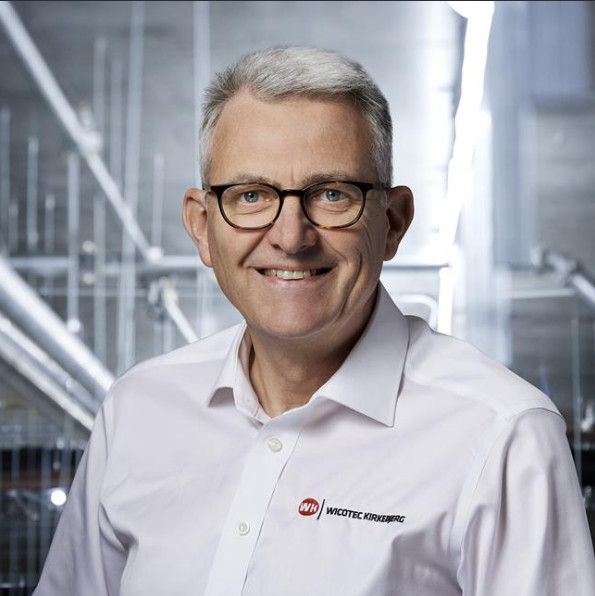
"We don't see Handyman as a project. We see it as a platform we continue to build on. Whenever we have a new idea or a new requirement, the question isn't whether we need to change systems again. It's how we can develop what we already have".
Michael Landsgaard, Divisional Director and Head of Service/FM at Wicotec Kirkebjerg.
Service Isn’t a Cost. It’s the Business.
When Michael Landsgaard talks about service, he rarely focuses on work orders, time tracking or software. He talks about trust.
In a market where many companies can perform the same technical tasks, the difference isn’t necessarily who can replace a filter or repair a pump. It’s the value customers experience before, during and after every service visit.
That’s why Wicotec Kirkebjerg has never been interested in simply digitalising its service processes.
Instead, the goal is to help customers make better decisions. To build a detailed service history for every asset. To document work with photos, checklists and service reports. And to advise customers on when components should be replaced, long before they become an operational problem.
In short, it’s about turning service into an ongoing advisory relationship rather than a series of individual visits.
“We’re a large company, and we can’t compete with the small local contractor on price alone. We have to offer something more. Customers need to experience higher quality and greater peace of mind across all technical disciplines. They need to see the value they’re paying for,” he explains.
Documentation is becoming an increasingly important part of that value, especially as customers want greater insight into their own technical assets. What work has been carried out? Which parts have been replaced? How has the equipment performed over time? And when should the next investment be planned?
When all this information is brought together in one place and follows an asset throughout its lifecycle, service becomes a valuable decision-making tool – both for the customer and for Wicotec Kirkebjerg.
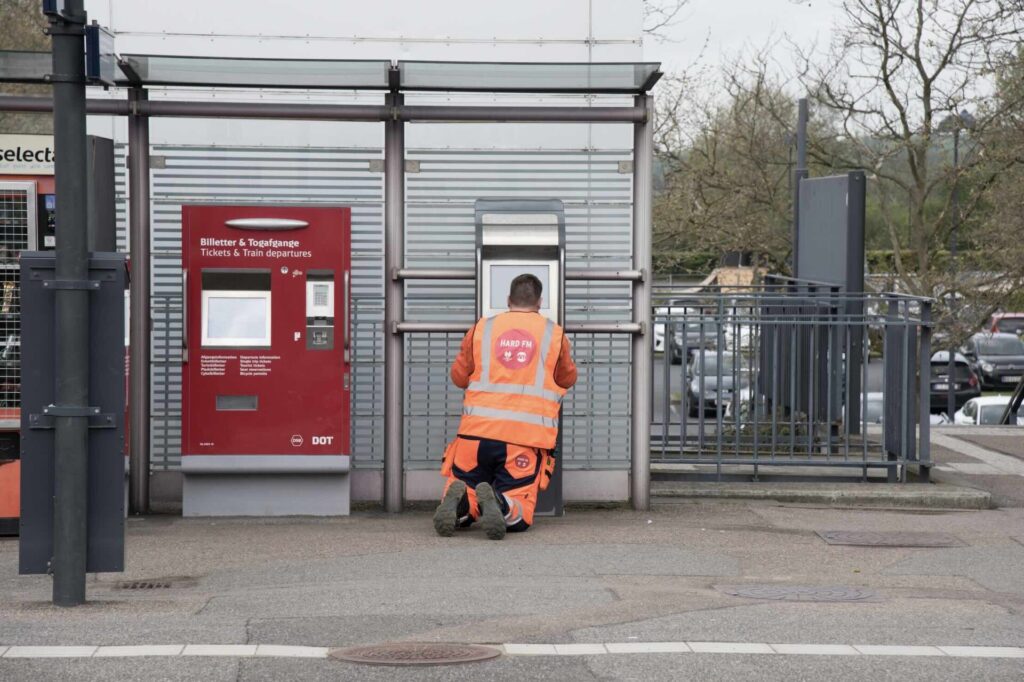
Integrations Aren’t Just About Systems. They’re About People.
When Michael Landsgaard is asked what matters most to making the company’s strategy work, he doesn’t start by talking about features or software. He starts with integrations.
Because ultimately, integrations are about making life easier for the people who keep service operations running every day.
“If a technician works for seven different customers, and each customer expects us to use their own system, things quickly become complicated. That’s why it’s so important for us that our technicians can work in one digital platform wherever possible,” he explains.
This thinking has shaped the integrations Wicotec Kirkebjerg has developed over the past few years.
When Wicotec Kirkebjerg won a nationwide service contract with DSB, Denmark’s national railway company, the integration between Handyman and DSB’s ServiceNow platform was a key part of the solution. Work orders are created automatically, assigned to the right technician and sent back with photos, documentation and service reports as soon as the job is completed. Today, around 60,000 service jobs are handled this way every year.
The same approach is behind a new integration with Vestforbrænding, designed to support the maintenance of thousands of district heating installations. And the ambition doesn’t stop there. Microsoft Dynamics 365 Business Central is already a central part of the company’s digital infrastructure, while further integrations with platforms such as Dalux, the MindKey HR system and other group-wide systems are among the next steps.
The principle behind all these integrations is simple: information should only need to be entered once.
“Once information has been entered into one system, it should flow automatically to the others. Otherwise, we end up entering the same information multiple times, making more mistakes and having technicians spend their time on administration instead of customers,” says Michael Landsgaard.
For Wicotec Kirkebjerg, integrations are therefore essential to delivering the kind of service experience the company wants to provide. The more information can flow automatically between customers, technicians and internal systems, the more time can be spent where it creates the greatest value – with the customer.
Turning Service Documentation into Valuable Advice
Not long ago, a service report was often something that simply got filed away once a job was completed.
At Wicotec Kirkebjerg, the ambition is very different.
The information collected during a service visit should continue to create value long after the job is done. Each visit builds on the previous one, giving both technicians and customers an increasingly accurate picture of an asset’s condition throughout its lifecycle.
It all starts on site. Technicians record their work digitally, take photos before and after servicing, follow standard checklists and build a detailed service history for each asset. QR codes make it easy to identify individual installations and instantly access previous service records, replaced parts and maintenance activities.
Wicotec Kirkebjerg is also working with condition assessments, allowing technicians to gradually build a clearer picture of which components are approaching the end of their useful life and which assets are still performing well. This information helps shift the conversation with customers from repairs to planning ahead.
“We want to be able to advise customers on when something should be replaced, long before it becomes a problem. That’s the kind of service we want to deliver,” says Michael Landsgaard.
He also sees significant potential in artificial intelligence. The company is already working on implementing AI that can turn technicians’ brief notes into detailed service reports, drawing on the information, photos and materials recorded during each job.
The aim is to free up technicians’ time while improving the quality of the documentation customers receive.
“Our technicians are excellent at what they do. But they’re not necessarily trained writers. If technology can help them describe the work they’ve carried out, customers get better reports, and technicians can spend more time doing what they do best,” says Michael Landsgaard.
For him, this is where the service industry is heading. It’s not about producing more reports for the sake of it. It’s about creating more valuable insights. And when service documentation becomes a source of knowledge, every service visit also becomes an opportunity to start the next conversation with the customer.
A Platform That Grows with the Business
When Wicotec Kirkebjerg chose Handyman in 2019, it wasn’t with the expectation that the project would one day be finished.
Quite the opposite.
The company chose the platform because it needed a solution that could evolve alongside the business. New business areas, more technicians, closer integrations and new digital workflows all had to be possible without starting from scratch.
That’s why Wicotec Kirkebjerg is now moving into the next phase of its rollout.
More departments will be brought onto the platform, even more technicians will start using it, and new integrations will make everyday work easier. Michael Landsgaard also sees significant potential for expanding the platform’s role across the organisation – and eventually perhaps into other companies within the Aarsleff Group.
“We don’t see Handyman as a project. We see it as a platform we continue to build on. Whenever we have a new idea or a new requirement, the question isn’t whether we need to change systems again. It’s how we can develop what we already have,” he explains.
The same long-term thinking applies to internal processes. The ambition is to eventually automate the onboarding of new employees, assigning the right roles, skills and certifications through integrations with systems such as MindKey HR. Similarly, new workflows and group-wide systems should be easy to connect as the organisation evolves.
For Michael Landsgaard, this is exactly what makes a standard platform a strategic investment. It gives Wicotec Kirkebjerg a foundation that can continue to evolve for many years to come.
It also reflects the confidence the company has built in the platform. After six years, the conversation is no longer about whether Handyman is the right fit for Wicotec Kirkebjerg. It’s about how far the platform can help take the company’s service business in the years ahead.
The Future of Field Service Starts with Data
When Michael Landsgaard looks a few years ahead, he sees a service organisation that, in many ways, still works much as it does today. Technicians will still be the ones meeting customers, solving problems and keeping technical assets running.
What will change is how decisions are made.
The amount of available data continues to grow. Sensors and IoT devices provide increasingly detailed information about the condition of technical assets. Artificial intelligence helps turn service records into useful documentation. And as service histories become more comprehensive, it becomes increasingly possible to plan maintenance before problems occur.
“We’ll be moving much more towards condition-based maintenance. We won’t necessarily need to service an asset just because the calendar says it’s time. We’ll do it when the data tells us it’s needed,” says Michael Landsgaard.
This shift places even greater demands on the platforms that connect service organisations. Cloud solutions, open integrations and the seamless flow of data will no longer simply be competitive advantages. They’ll become essential for developing new digital services and creating greater value for customers.
For Michael Landsgaard, the direction is clear. Service is becoming less about reacting when something breaks down and more about using data, insights and expert advice to prevent problems, plan investments and create greater value throughout the entire lifecycle of technical assets.